
As water scarcity becomes an increasingly pressing global issue, homeowners and gardeners alike are looking for innovative ways to conserve resources without sacrificing the beauty of their landscapes. One of the most overlooked, abundant, and highly effective water sources sitting right inside your home is greywater—specifically, the wastewater generated by your washing machine. Instead of letting gallons of perfectly usable water disappear down the sewer drain, a simple diversion system can redirect this resource to give your backyard’s decorative trees and woody shrubs a consistent, deeply hydrating drink.
Implementing a laundry-to-landscape greywater system is an exceptional way to practice sustainable urban homesteading. However, transitioning from municipal drainage to eco-friendly irrigation requires a clear understanding of system safety, soil dynamics, and plant biology. When handled correctly, laundry water can keep your ornamental landscape lush and thriving even through dry spells. This comprehensive guide will break down everything you need to know to safely and legally tap into your washing machine’s output to nurture your decorative plants.
What is Greywater (And Why Is Laundry Water Ideal)?
To successfully reuse residential wastewater, it is vital to differentiate between types of household drainage. Wastewater is generally categorized into three distinct tiers:
- Blackwater: Water coming from toilets, bidets, or kitchen garbage disposals. This water contains high levels of pathogens, organic matter, and fecal bacteria. It is strictly hazardous and can never be reused at home without professional, industrial-grade treatment.
- Clearwater: Clean water that has bypassed human use, such as the condensation lines from air conditioning units or ice makers. This water is completely safe for immediate garden use.
- Greywater: Wastewater generated from domestic processes such as washing clothes, taking showers, and washing hands. While it contains traces of lint, dirt, and cleaning agents, it lacks the dangerous pathogens found in blackwater.
Laundry water is considered the absolute best “entry point” for household greywater reuse. Unlike showers or bathroom sinks—which often require breaking into walls or altering complex under-floor plumbing—your washing machine is equipped with an internal directional pump. This means the appliance naturally does the heavy lifting, pushing the water out of the machine and allowing you to divert it directly out into the garden through a simple valve without installing expensive auxiliary pumps.
1. The Core Safety Rules of Greywater Irrigation
While greywater is an incredible asset for ornamental trees and shrubs, it must be treated with respect to maintain environmental and household hygiene. There are three unbreakable safety rules you must follow when designing your system:
Never Store Greywater
Because greywater contains organic material like skin flakes, dirt, and lint, it is a breeding ground for bacteria if left sitting around. If you store greywater in a tank or barrel, it will quickly consume all available oxygen, turn anaerobic, and begin emitting a foul, stagnant odor within 24 hours. The golden rule of greywater is “sink it, don’t store it.” The water must flow directly from the washing machine into the soil immediately.
Keep It Underground (Subsurface Irrigation)
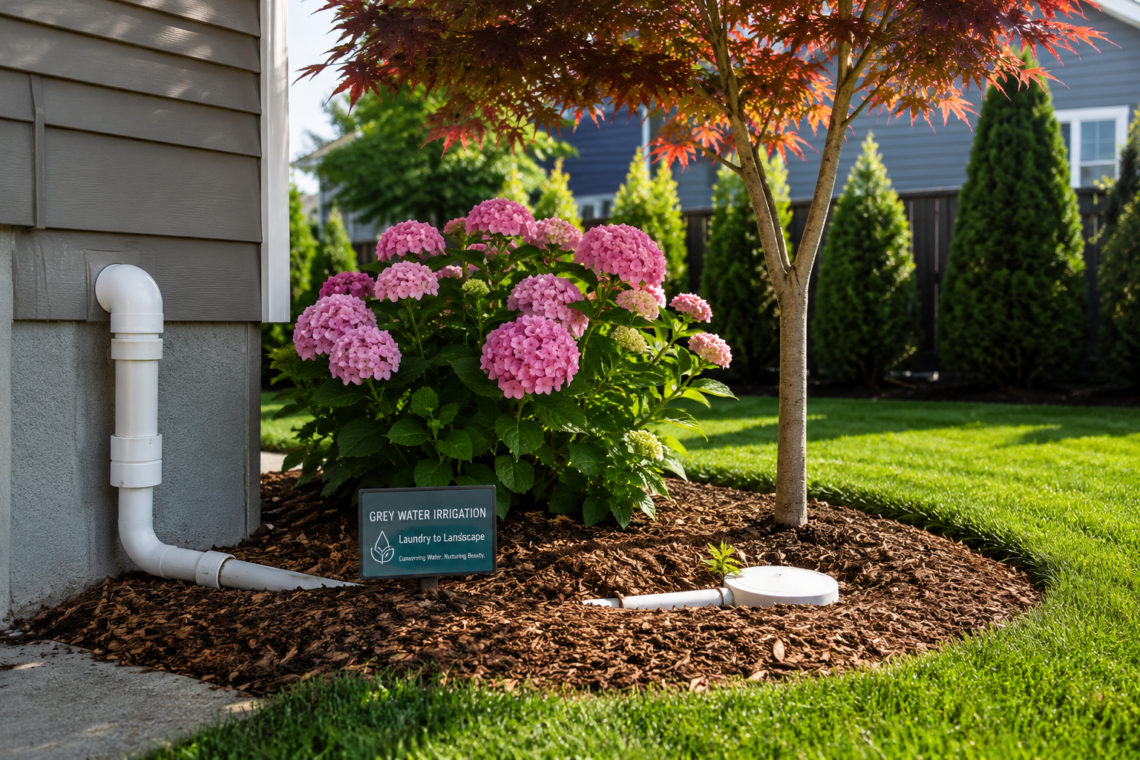
Greywater should never be sprayed into the air using conventional sprinklers, nor should it be allowed to pool or puddle on the surface of the lawn. Pooling water invites mosquitoes, creates runoff, and increases the risk of human or pet contact. Instead, greywater must be delivered directly beneath a layer of mulch or wood chips into a dedicated “mulch basin” surrounding your trees. This keeps the water completely out of sight and allows soil microbes to filter it safely.
Know Your Plants (Ornamentals Only)
This system is strictly designed for decorative trees, ornamental woody shrubs, and perennial flowers. Never use laundry greywater to irrigate root vegetables (like carrots or radishes) or leafy greens (like lettuce) where the edible portion of the plant comes into direct contact with the soil or water. Large trees and shrubs possess extensive, deep root systems that are highly efficient at filtering out greywater elements while soaking up the moisture.
2. Choosing the Right Eco-Friendly Detergents
The water leaving your washing machine is only as clean as the products you put into it. To keep your decorative trees and soil microfauna healthy, you must make a permanent switch to biocompatible, plant-safe detergents.
Traditional laundry detergents are packed with chemical elements that can permanently damage soil structure and alter pH levels over time. When shopping for plant-safe laundry products, look for the following characteristics:
- Boron-Free: While boron is a trace micronutrient that plants need in tiny quantities, it is highly toxic to them in large doses. Standard detergents use borax or boron as a whitening agent, which can accumulate in the soil and eventually kill trees and shrubs.
- Low Sodium: High concentrations of salt (sodium) destroy soil structure, creating a hard, impermeable crust that prevents water from soaking in and dehydrates plant roots. Opt for liquid detergents rather than powders, as powder formulas generally contain high amounts of sodium fillers.
- Biodegradable and Phosphate-Free: Choose cleaners that break down naturally into benign organic elements without leaving harmful chemical residues behind.
3. The “Laundry-to-Landscape” (L2L) System Design
The most popular, reliable, and legally permitted greywater diversion layout is known as the Laundry-to-Landscape (L2L) system. Invented by ecological design pioneers, this setup requires no permits in many jurisdictions because it does not alter the home’s permanent interior drainage plumbing.
How the L2L System Works:
- The 3-Way Valve: You attach a brass or PVC 3-way diverter valve directly to the discharge hose of your washing machine. One side of the valve routes the water to your normal sewer or septic line, while the other side routes it through a hole in the wall out to the garden. This allows you to easily flip a switch and send water to the sewer if you are washing heavily soiled items, using bleach, or if the garden soil is already saturated from heavy rain.
- The Mainline: From the valve, a 1-inch flexible PVC or HDPE pipe carries the water outside.
- The Subsurface Emitters: Once outside, the line branches into smaller lines that lead to your target trees and shrubs. The pipe empties into a series of mulch basins—shallow trenches dug around the drip line of the trees, filled with wood chips. The wood chips act as a natural biological filter, catching lint and organic matter while allowing clean water to sink deeply into the root zone.
4. Perfect Target Plants for Laundry Greywater
Not all plants enjoy the same soil conditions, so it helps to target species that tolerate the slightly alkaline nature of standard greywater. Large, established landscape features are the ideal candidates.
- Top Tree Choices: Fruitless decorative trees, oaks, maples, palms, poplars, and willows flourish with greywater irrigation.
- Top Shrub Choices: Large ornamental woody perennials such as roses, hydrangeas, lilacs, bougainvillea, and hibiscus are highly resilient and respond beautifully to the regular influx of deep moisture.
- Plants to Avoid: Avoid using greywater on acid-loving plants. Because detergents are inherently alkaline, they will gradually raise the pH of the soil. Keep greywater away from azaleas, rhododendrons, blueberries, and gardenias, which require highly acidic environments to survive.
Conclusion: A Greener Garden and a Lower Water Bill
Diverting your laundry wastewater to your backyard is a win-win strategy for sustainable living. By setting up a simple, gravity-fed subsurface mulch system and switching to plant-safe detergents, you can easily recycle thousands of gallons of water every year. Your decorative trees and shrubs will enjoy a steady supply of deep, root-level moisture, your garden will stay vibrant through hot summer months, and you will dramatically lighten the load on your municipal infrastructure—all while watching your monthly utility bills drop.


