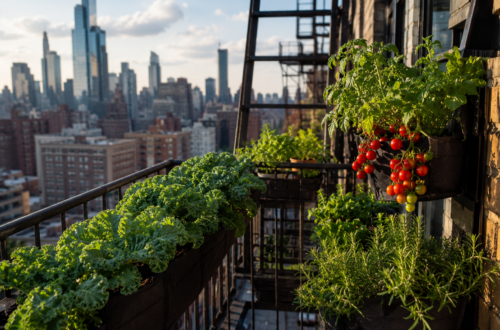
Urban gardening is an exercise in space management and efficiency. Whether you are transforming a tiny balcony, a concrete rooftop, or a fire escape into a green sanctuary, the container you choose is the most critical factor in your plants’ success. For decades, the traditional ceramic or plastic pot was the undisputed king of the patio. However, the rise of the “Grow Bag”—a breathable, fabric-based container—has sparked a heated debate among horticulturalists.
To build a high-yielding urban garden, you must understand that the “better” container depends entirely on your climate, your lifestyle, and the specific biology of what you are growing. Here is the deep dive into the Grow Bag vs. Traditional Pot showdown.
1. The Secret of “Air Pruning”
The most significant biological difference between these two containers lies in what happens to the roots once they reach the edge of the pot.
- Traditional Pots: When a root hits the hard, impermeable wall of a plastic or ceramic pot, it keeps growing in search of moisture and oxygen. Since it can’t go through the wall, it begins to circle the perimeter. This leads to a “root-bound” plant, where a thick, tangled mass of roots eventually chokes the plant, limiting its ability to take in nutrients.
- Grow Bags: Because the fabric is breathable, when the root tip reaches the edge of the bag, it is exposed to air. This naturally “burns” or dehydrates the tip, a process known as air pruning. This signals the plant to send out hundreds of small, fibrous feeder roots from the center.
- The Winner: Grow Bags. Air pruning creates a much more efficient and robust root system, leading to faster growth and higher fruit production.
2. Temperature Regulation and Thermal Stress
In an urban environment, “Heat Island” effects can cook your plants. Concrete balconies and rooftops radiate heat, and the container must act as a shield.
- Traditional Pots: Plastic and dark ceramic pots act like tiny ovens. They trap heat within the soil, which can literally “boil” delicate root hairs during a summer heatwave. On the flip side, terra cotta is porous and stays cooler, but it is heavy and prone to cracking.
- Grow Bags: Fabric is naturally breathable. Much like a high-performance athletic shirt, grow bags allow heat to dissipate through the walls. This evaporative cooling keeps the soil temperature significantly lower than in plastic pots.
- The Winner: Grow Bags for hot rooftops; Traditional Pots for colder climates where you want the soil to stay warm.
3. Water Management: Drainage vs. Retention
How often do you want to be holding a watering can? This is the primary trade-off in the urban garden.
- Traditional Pots: These are excellent at moisture retention. If you are a “forgetful” gardener, a plastic pot with a saucer can keep a plant hydrated for days. However, they are also prone to waterlogging, which leads to root rot if the drainage holes get clogged.
- Grow Bags: It is almost impossible to overwater a grow bag because the entire surface area provides drainage. However, this means they dry out much faster. In the height of summer, a large tomato plant in a grow bag might need water twice a day.
- The Winner: Traditional Pots for busy gardeners; Grow Bags for those prone to overwatering.
4. Aesthetics and Longevity
Let’s be honest: appearance matters in a small urban space.
- Traditional Pots: They offer endless aesthetic variety—from sleek modern fiberglass to rustic glazed ceramic. They are a permanent design feature of your home. High-quality pots can last a lifetime if protected from frost.
- Grow Bags: While brands are becoming more stylish, most grow bags look like… well, bags. They can develop salt stains (white crust) on the outside from fertilizers and hard water. Over time, the fabric will degrade, usually lasting between 3 to 6 seasons.
- The Winner: Traditional Pots. They provide a “finished” look that fabric bags simply cannot match.
5. Storage and Mobility
In an urban setting, you might not have a shed or garage to store empty pots during the winter.
- Traditional Pots: They are bulky and heavy. Stacking them risks breakage, and they take up a massive amount of “real estate” in your closet or basement during the off-season.
- Grow Bags: When the season is over, you simply dump the soil (into your compost or a storage bin), wash the bags, fold them flat, and stick them in a drawer. They weigh almost nothing.
- The Winner: Grow Bags, hands down.
Final Verdict: Which Should You Choose?
- Choose Grow Bags if: You are growing heavy feeders like potatoes, tomatoes, or peppers; you have a scorching hot rooftop; or you have zero storage space.
- Choose Traditional Pots if: You want a decorative “statement” garden; you are growing moisture-loving plants like ferns or tropicals; or you live in a very dry climate where water conservation is the priority.