Many gardeners spend hours pulling “weeds” from their beds, unaware that they are discarding some of the most potent biological medicine available. These plants are often “pioneer species”—high-vibration organisms designed by nature to repair the soil and provide concentrated nutrients to the local ecosystem.
When we shift our perspective from “eradication” to “harvesting,” our backyard becomes a living pharmacy. Here are five common wild plants that offer more medicinal power than many store-bought supplements.
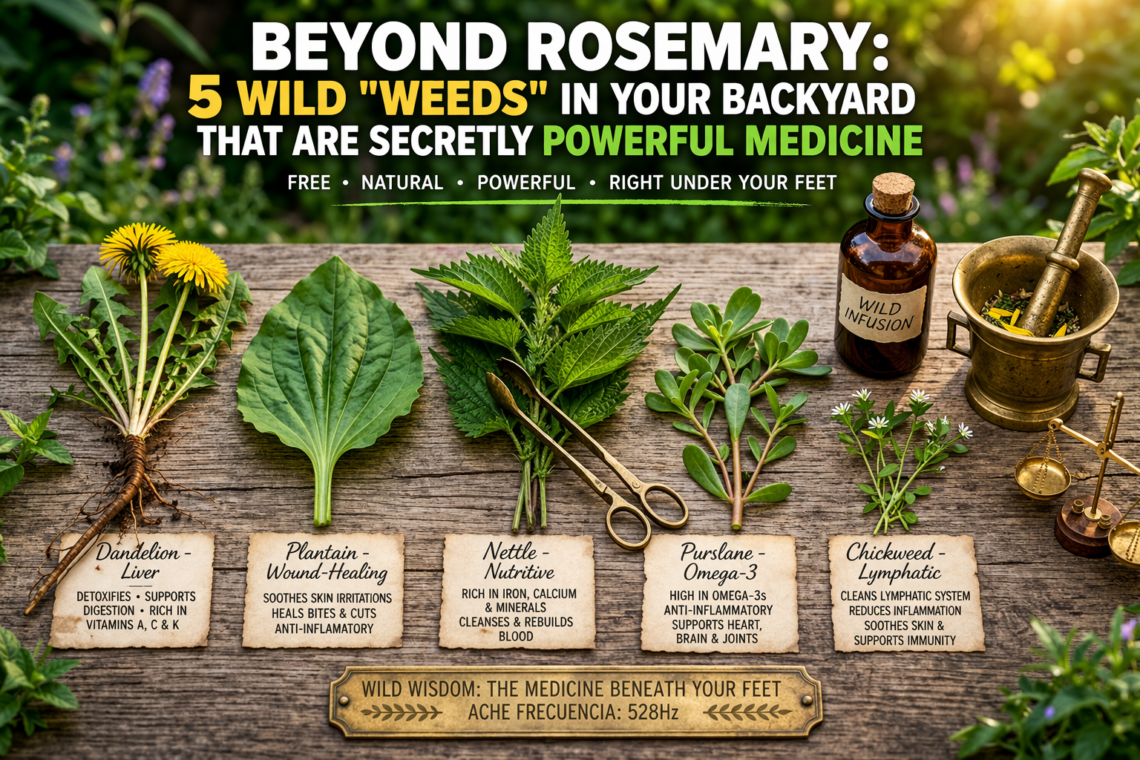
1. Dandelion (Taraxacum officinale): The Liver Regenerator
Often seen as the enemy of the perfect lawn, the dandelion is a complete nutritional powerhouse. Every part of the plant—from the root to the flower—is edible and medicinal.
- The Benefit: Dandelion is a powerful “cholagogue,” meaning it stimulates bile production and helps the liver flush out fat-soluble toxins.
- How to Use: Infuse the roots in a “Banana Peel Tea” style decoction for a coffee substitute, or use the bitter leaves in a Super-Nutrient Salad to activate digestion.
2. Plantain (Plantago major): The “Nature’s Band-Aid”
Found in almost every yard with compacted soil, this broad-leafed plant is the ultimate first-aid tool. It contains allantoin, a compound that stimulates cell growth and tissue repair.
- The Benefit: It is anti-inflammatory and drawing. It can pull the venom out of bee stings, soothe mosquito bites, and speed up the healing of minor cuts.
- How to Use: Create a “spit poultice” by chewing a clean leaf and applying it directly to a sting, or infuse it in oil for a long-lasting skin salve.
3. Nettle (Urtica dioica): The Biological Multivitamin
While famous for its sting, the stinging nettle is perhaps the most mineral-dense plant in the temperate world. It acts as a deep systemic tonic, nourishing the blood and kidneys.
- The Benefit: High in iron, magnesium, and calcium. It is an excellent natural remedy for seasonal allergies (hay fever) as it stabilizes histamine levels.
- How to Use: Blanch the leaves in boiling water to “deactivate” the sting, then use them like spinach or dry them for a deeply nourishing tea.
4. Purslane (Portulaca oleracea): The Omega-3 King
This succulent-like weed thrives in hot, dry cracks in the pavement or garden. It is one of the few land plants that contains significant amounts of Alpha-Linolenic Acid (Omega-3).
- The Benefit: Supports heart health and brain function while providing a massive dose of Vitamin E and Beta-carotene.
- How to Use: Its crunchy, salty leaves are perfect for fresh eating. Toss them into salads or blend them into green smoothies for a natural “biological boost.”
5. Chickweed (Stellaria media): The Lymphatic Flush
Chickweed is a delicate, star-flowered plant that appears in the cool, moist months. It is highly valued for its ability to move fluids and reduce swelling.
- The Benefit: It acts on the lymphatic system, helping the body move stagnant fluid and reduce internal inflammation.
- How to Use: Use it fresh in a juice or as a cooling topical compress for itchy skin conditions like eczema or psoriasis.
The Wild Apothecary Comparison
| Weed Name | Primary Action | Best Part to Use |
| Dandelion | Liver Detox / Digestion | Root & Leaves |
| Plantain | Wound Healing / Drawing | Fresh Leaves |
| Nettle | Nutritive / Anti-allergy | Leaves (Cooked/Dried) |
| Purslane | Omega-3 / Brain Health | Stems & Leaves |
| Chickweed | Lymphatic / Cooling | Fresh Whole Plant |