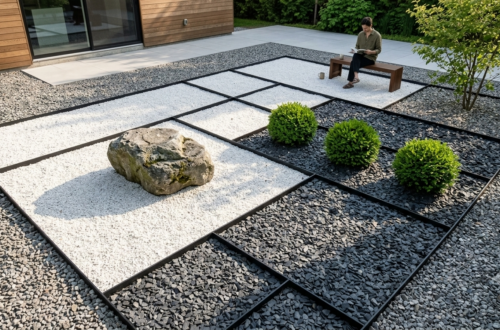
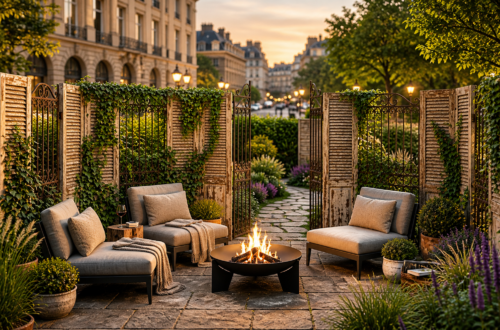
In the world of interior design, the “open plan” is being replaced by the “broken plan”—a concept that uses semi-permanent partitions to create distinct zones without losing the sense of space. Bringing this philosophy into your garden is one of the most effective ways to transform a flat, exposed yard into a multi-dimensional sanctuary.
By using recycled screens to carve out private “outdoor rooms,” you don’t just add privacy; you create mystery. When you can’t see the entire garden at once, the space feels larger, more intentional, and more aligned with the natural “pockets” of energy found in the wild.
1. The Psychology of the “Outdoor Room”
An open garden can sometimes feel vulnerable or overwhelming. By creating “rooms”—a kitchen area, a meditation corner, or a reading nook—you signal to your nervous system that it is safe to settle.
- The Benefit: Each “room” can have its own sensory profile. One might be for social high-energy (near the house), while another is a “Zero-Point” silence zone at the far end of the garden.
- The Strategy: Use the Rule of Three. Divide your space into a transition zone, a social zone, and a private sanctuary.
2. Upcycling with Intent: Materials for Your Screens
The most sustainable (and high-character) screens are those that have already lived a life. Recycled materials add a “patina of time” that new plastic fencing simply cannot match.
- Old Windows & Doors: Stripped and sealed, these create a “shabby-chic” partition that blocks wind but allows light to filter through the glass panes.
- Pallet Wood Grids: Vertical slats from heat-treated pallets provide a perfect mounting surface for climbing plants like Jasmine or Clematis.
- Copper Pipe Frames: Repurposed plumbing pipes can be used to hang outdoor fabric or bamboo mats, creating a modern, industrial look that weathers into a beautiful green verdigris over time.
- Wattle Fencing: Using “found” branches from your own pruning (willow or hazel) to weave a rustic, 100% organic screen.
3. Placing Your “Thresholds”
The secret to a successful broken plan garden is the threshold—the point where you move from one room to another.
- The Narrowing: Create a slight bottleneck using two large planters or a recycled screen on either side.
- The Reveal: Ensure that the view into the next “room” is partially obscured. This triggers the “explorer” instinct, making a small garden feel like a vast journey.
- The Grounding: Change the texture underfoot as you enter a new room. Move from grass to gravel, or from wood to river stones, to physically signal to the body that you have entered a different space.
4. Living Screens: Blending the Recycled with the Organic
A recycled screen is at its best when it acts as a trellis.
- For North-Facing Walls: Use recycled frames for Ivy or Hydrangea petiolaris.
- For Sunny Spots: Use wooden slats for Grapes or Hops. These provide shade in the summer and lose their leaves in the winter, allowing the low sun to reach your home when you need the warmth.
Garden Room Functional Map
| Room Type | Recommended Screen | Sensory Focus |
| The Social Hub | Pallet wood slats (High privacy) | Sound (Laughter/Music) |
| The Meditation Nook | Woven willow or Bamboo | Scent (Lavender/Jasmine) |
| The Work/DIY Zone | Repurposed metal corrugated sheets | Utility / Protection |
| The Secret Library | Old window frames (Light focus) | Visual (Greenery/Books) |