Summer is traditionally viewed as the peak season for garden growth, a time when warm sun and long days combine to produce lush foliage and bountiful harvests. However, as global climate patterns shift, summers are increasingly characterized by extreme, prolonged heat waves and unprecedented temperature spikes. When temperatures soar past 90°F (32°C) and linger there for days, plants enter a state of severe physiological stress. Without intervention, a single week of extreme heat can scorch leaves, abort blossoms, dry out soil completely, and destroy months of hard work.
Keeping a garden alive and thriving during a brutal summer heat wave requires moving beyond routine watering schedules. It demands a strategic, proactive approach based on plant biology, soil thermodynamics, and microclimate management. By understanding how plants respond to heat stress and implementing specialized techniques to protect the soil ecosystem and conserve moisture, you can help your garden survive even the most intense summer spikes. This comprehensive guide covers the essential strategies every gardener needs to shelter, hydrate, and sustain their plants during extreme summer weather.
The Science of Heat Stress: How Plants React to Extreme Temperatures
To effectively protect your garden, you must first understand what happens to plants when temperatures become excessive. Plants regulate their internal temperature through a process called transpiration, which is essentially the plant equivalent of sweating. Water is drawn up through the roots, moves through the stem, and evaporates through microscopic pores on the leaves known as stomata. This evaporation cools the plant and keeps its cellular functions running smoothly.
However, during an extreme heat wave, the rate of evaporation can easily exceed the roots’ ability to absorb water. When this tipping point is reached, plants engage a survival mechanism: they close their stomata to conserve water. While this prevents dehydration, it also stops the cooling process, causing the plant’s internal temperature to rise dangerously. Furthermore, closed stomata mean the plant cannot absorb carbon dioxide, effectively halting photosynthesis. If this state continues for too long, the plant exhausts its energy reserves, leading to cellular breakdown, leaf scorch, blossom drop, and eventual death.
1. Deep and Strategic Watering: Timing and Technique Are Everything
When a heat wave hits, the instinctive response is to water more frequently. However, shallow, frequent watering during the heat of the day is highly inefficient and can actually harm your plants. Water droplets left on leaves in mid-day sun can act as tiny magnifying glasses, exacerbating leaf scorch, while a significant percentage of the water evaporates before ever reaching the root zone.
The golden rule of heat-wave hydration is to water deeply and early in the morning. Watering at dawn allows moisture to soak deep into the earth while the air and soil temperatures are at their lowest. This ensures that the root zone is fully saturated before the intense heat of the day arrives, giving plants the hydration reservoir they need to maintain transpiration.
Aim for deep soaking rather than light sprinkling. Deep watering encourages roots to grow further down into the cooler, moisture-retentive layers of the soil. Shallow watering, by contrast, keeps roots near the hot surface, making them highly vulnerable to drying out within hours. For container gardens and raised beds, which dry out much faster than in-ground plots, you may need to check the soil moisture twice a day—once in the early morning and again in the late afternoon—watering a second time if the top inch of soil feels dry.
2. Mulching: The Ultimate Thermal Blanket for Soil
If deep watering is the first line of defense during a summer temperature spike, mulching is undoubtedly the second. Uncovered, bare soil acts as a heat magnet, absorbing solar radiation, baking the root systems of your plants, and allowing valuable moisture to evaporate freely into the atmosphere.
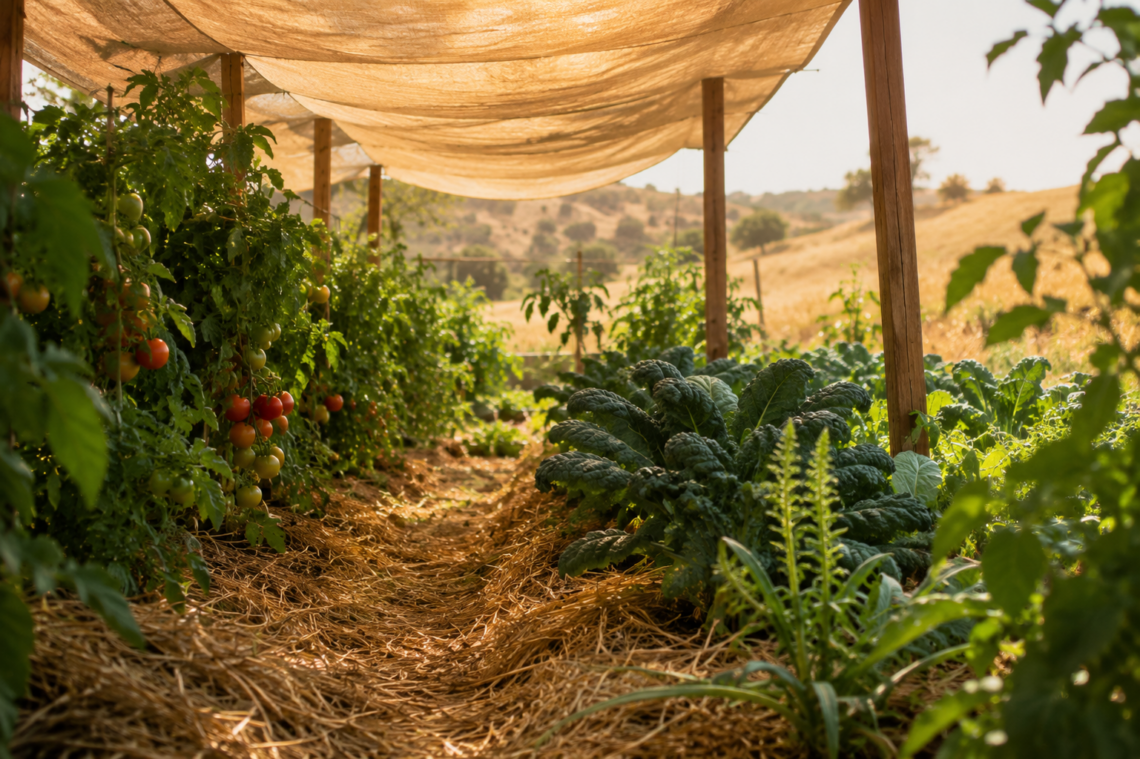
Applying a thick layer of organic mulch acts as a protective thermal blanket over your garden beds. A 2-to-3-inch layer of clean straw, shredded leaves, wood chips, or pine needles can lower soil temperatures by up to 10°F to 15°F compared to bare ground. By keeping the soil cooler, mulch dramatically reduces evaporation, meaning the water you apply stays in the ground where plants can use it. Additionally, as organic mulch breaks down over time, it improves soil structure, increasing its natural water-holding capacity for future seasons. When applying mulch, ensure it does not directly touch the stems or trunks of your plants, as this can trap excess moisture against the bark and invite pests or fungal issues.
3. Providing Temporary Shade: Creating a Microclimate Refuge
When solar radiation is intensely direct, plants can suffer from sunburn just like humans. Fruits like tomatoes, peppers, and eggplants are particularly susceptible to sunscald, which ruins the harvest, while delicate leafy greens will quickly bolt, turn bitter, and wither under unprotected sunlight.
Introducing temporary shade structures is an incredibly effective way to reduce ambient temperatures and UV stress in your garden. Utilizing specialized 30% to 50% UV-blocking shade cloth suspended over your garden beds can lower the temperature under the cloth by several degrees and reduce the intensity of the midday sun.
For the best results, erect shade structures so they protect plants from the harsh afternoon sun (typically from 11:00 AM to 4:00 PM) while still allowing cooler morning light to reach them. If professional shade cloth is unavailable, you can get creative with everyday items: old bedsheets, sheer curtains, lattice panels, or even strategically placed patio umbrellas can serve as excellent temporary shields. Ensure the fabric is securely anchored so it doesn’t collapse onto the plants under a sudden summer breeze, and leave enough open space beneath the cloth to allow air to circulate freely.
4. Halt Pruning and Fertilization: Let the Garden Rest
When gardeners see their plants yellowing, wilting, or dropping leaves during a heat wave, their immediate impulse is often to apply fertilizer or prune away the damaged foliage. During a temperature spike, however, both of these actions can be catastrophic.
Applying fertilizer—especially synthetic, nitrogen-heavy formulas—forces the plant to expend its limited energy producing weak, tender new growth. Because the plant is already struggling just to stay hydrated and keep its existing cells alive, forcing new growth creates immense physiological stress. Furthermore, when soil is dry, concentrated fertilizers can easily burn the delicate root hairs, permanently damaging the plant’s ability to absorb water.
Pruning should also be strictly avoided during a heat wave. Leaf canopy, even when slightly wilted, provides vital shade to the inner branches, stems, and fruits of the plant. Removing damaged leaves exposes vulnerable tissue to direct solar radiation, increasing the risk of sunscald. Additionally, pruning creates open wounds that the plant must work to heal, diverting valuable moisture and energy away from survival. Wait until the heat wave has completely broken and temperatures return to seasonal norms before doing any cleanup or feeding.
5. Wind Defense and Container Management
Summer heat waves are frequently accompanied by dry, hot winds. These winds act like a giant hair dryer, ripping moisture away from leaf surfaces at an alarming rate and forcing plants to transpire faster than their roots can handle. If a hot wind is forecasted during a temperature spike, consider erecting temporary windbreaks using burlap, shade cloth, or solid barriers on the windward side of your garden beds to disrupt the airflow.
For container gardens, flexibility is your greatest asset. Potted plants are incredibly vulnerable to heat because their roots are trapped above ground in a limited amount of soil that heats up rapidly. During a spike, physically move your containers out of the blazing afternoon sun. Relocate them to a shaded porch, under a large tree, or to the east side of your home where they will only receive gentle morning light. Grouping containers close together also creates a shared, humid microclimate that helps reduce individual water loss.
Conclusion: Patience, Care, and Recovery
Managing a garden through a brutal summer heat wave is an exercise in crisis management. The primary goal is not to encourage rapid growth or bumper harvests, but simply to help your plants survive until conditions improve. It is entirely normal for plants to look a bit tired, flag slightly in the afternoon, or temporarily pause fruit production when temperatures peak.
By prioritizing deep morning watering, maintaining a robust layer of protective mulch, offering shade from the punishing afternoon sun, and avoiding the temptation to prune or fertilize, you provide your garden with the ultimate survival toolkit. Once the temperature spike subsides and cooler weather returns, your plants will naturally exit their defensive state, kickstart photosynthesis, and reward your protective efforts with a beautiful, resilient burst of late-summer growth.