Life in the skyscrapers of major metropolises often disconnects us from nature and the fundamental cycles of the earth. However, the human desire to grow, harvest, and consume fresh food has found a new stage in the most unexpected corner of urban architecture: fire escapes and high-rise balconies. Although originally designed strictly as evacuation and safety routes, these small spaces suspended in the air offer astonishing agricultural potential if their unique climatic conditions are understood and properly leveraged.
Turning a metal structure or an elevated balcony into an efficient, high-yield vertical farm requires more than just placing pots at random. High-rise environments present microclimates that are drastically different from traditional gardens at ground level. Up here, solar exposure can be intensely direct, wind gusts are much more severe, and water evaporation occurs at an accelerated rate. Despite these physical challenges, the strategic use of containers, the selection of hyper-nutritive substrates, and—most importantly—the right choice of resilient botanical crops can transform any fire escape into a highly productive edible oasis. In this detailed guide, we will explore the dynamics of these urban microclimates and analyze the 5 high-yield crops that not only survive but thrive in the heights.
Understanding the High-Rise Microclimate: Wind, Sun, and Thermodynamics
Before sowing your first seed, it is vital to analyze the physics of the environment where your urban garden will develop. Weather conditions on the tenth or twentieth floor of a residential building differ enormously from those in a backyard. The first critical factor is the wind effect. As we ascend, air currents become faster and more constant due to the lack of natural ground barriers. This continuous airflow increases the transpiration rate of plants, meaning they release moisture much faster through their leaves, dehydrating the soil in a matter of hours.
The second factor is solar radiation and urban thermodynamics. The metal structures of fire escapes and the concrete of building facades absorb solar heat during the day and release it slowly at night. This creates a “microbial heat island” effect that can raise the temperature of the roots. Therefore, the choice of containers is a fundamental pillar. Thin, black plastic pots should be avoided, as they absorb too much heat and can literally cook your crops’ root systems. Instead, using self-regulating fabric grow bags or self-watering containers is the best strategy to protect the soil from extreme temperature fluctuations.
The 5 High-Yield Crops for Elevated Spaces
To maximize the extremely limited space of a fire escape or narrow balcony, we must focus on crops that offer a continuous harvest, have shallow roots, and possess a flexible structure capable of withstanding wind currents without breaking.
1. Determinate Dwarf Tomato Varieties (Cherry Tomatillos)
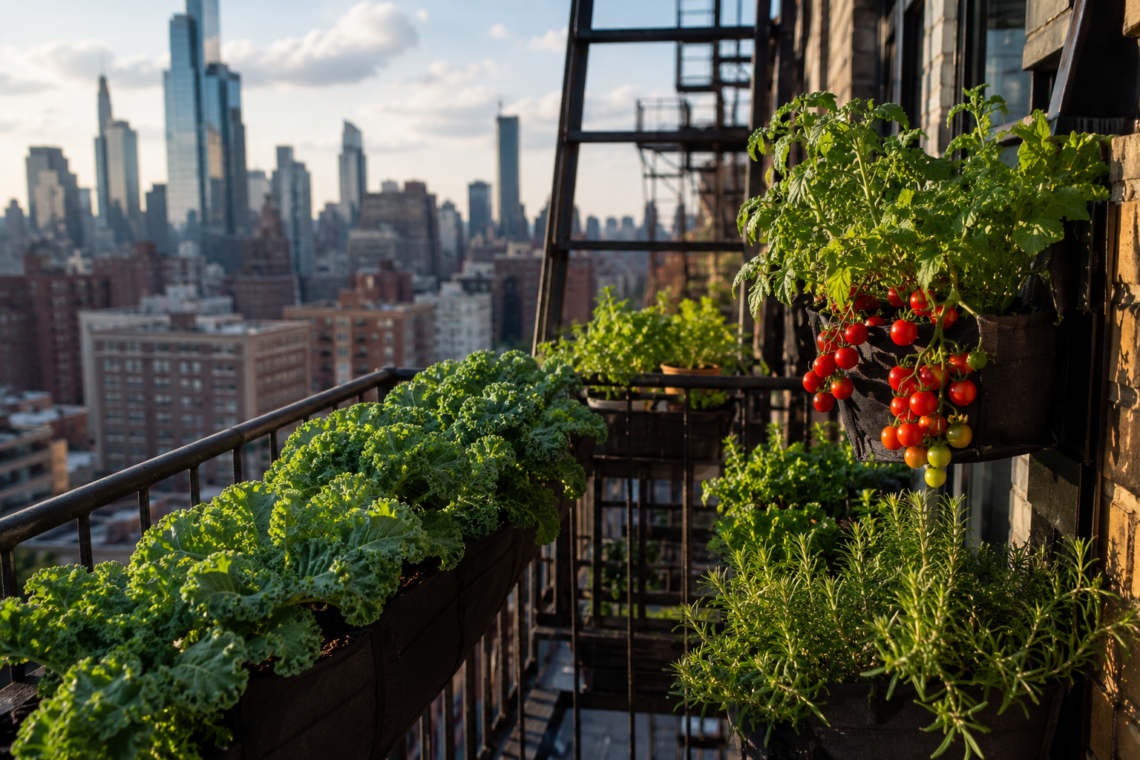
Traditional indeterminate tomatoes require massive trellises and are prone to being knocked down by strong winds. However, determinate dwarf varieties like ‘Tiny Tim’ or ‘Micro Tom’ are perfect for the heights. These plants grow compactly (rarely exceeding 30 to 50 centimeters in height), possess remarkably robust and dense stems, and produce hundreds of sweet fruits in compact clusters throughout the season. Their bushy structure distributes weight evenly, minimizing the risk of wind damage, and their high tolerance for direct sunlight makes them champions of exposed balconies.
2. Continuous-Harvest Leafy Greens (New Zealand Spinach and Dwarf Kale)
Fresh salads offer the highest return on investment in urban agriculture. Leafy green varieties such as Siberian dwarf kale or New Zealand spinach are exceptionally well-suited for elevated environments. Unlike traditional head lettuces that require a single harvest, these plants allow for the “cut-and-come-again” method. You can harvest the mature outer leaves every week, allowing the center of the plant to continue producing new leaves indefinitely. Furthermore, their flexible leaves simply bend with the wind instead of snapping.
3. Fast-Growing Radishes (Short-Root Varieties)
Vertical space and soil depth are scarce resources in the heights. Radishes (such as ‘French Breakfast’) solve this problem perfectly thanks to their ultra-shallow root system that develops flawlessly in window planters just 15 centimeters deep. The less root space they need, the lighter your pots will be. Their life cycle is astonishingly fast: you can sow and harvest crunchy radishes in a period of 22 to 30 days. This allows for constant crop rotation, ensuring a massive yield per square meter throughout the spring and summer.
4. Mediterranean Aromatic Herbs (Rosemary, Thyme, and Oregano)
Plants originating from the Mediterranean basin genetically evolved to thrive on rocky hillsides exposed to blazing sun, poor soils, and constant sea winds. This natural adaptation makes them ideal candidates for the rigorous conditions of a high-rise farm. Creeping rosemary, thyme, and oregano possess small, waxy, or hairy leaves designed specifically to reduce water loss from evaporation. By placing them on the most exposed edges of the structure, they also act as a natural windbreak to protect more delicate crops placed behind them.
5. Compact Hot Chilis and Peppers
Peppers, especially hot varieties like dwarf jalapeños, habaneros, or the ornamental ‘Poinsettia’ variety, thrive under the intense afternoon sun that bounces off building glass windows. These plants love the heat accumulated in concrete walls. They have a compact root system that tolerates confinement in medium-sized pots very well, and their erect, woody growth habit makes them highly stable against wind gusts. A few well-cared-for plants can supply a household with fresh spice for months.
Golden Rule of Safety: Fire escapes are structural safety elements and must never be completely blocked. Use vertical support systems and approved exterior hanging planters that securely hook onto the railings. Never exceed the structural weight limit; use lightweight substrates based on coco coir and perlite instead of heavy, clay-rich garden soil.
Advanced Irrigation and Nutrition Strategies in Vertical Spaces
Water management is the deciding factor between the success and failure of a solar farm in the heights. Due to high evaporation caused by the combination of constant sun and wind, traditional manual watering twice a day can become unsustainable. Implementing pots with self-watering systems (which contain internal water reservoirs at the base) allows plants to absorb moisture through capillary action according to their needs, protecting them from extreme hydric stress.
Regarding nutrition, when using lightweight substrates based on coco coir to avoid overloading the structure’s weight, a constant but diluted fertilization regimen is essential. Using liquid organic fertilizers, such as worm castings tea or fish emulsion applied every two weeks, ensures that nutrients are not completely washed away by continuous watering, maintaining soil health and optimizing the yield and flavor of your food.
Conclusion: Elevating Urban Food Sovereignty
Developing a farm on a fire escape or a high-rise balcony is a testament to human resilience and ingenuity. By transforming these arid, windy microclimates into efficient, high-yield growing spaces, we not only obtain food of unmatched freshness and free of pesticides, but we also mitigate the heat island effect of our cities and reconnect with the ecosystem. With the right containers, a smart vertical design that respects safety, and the five ideal crops analyzed here, any urban citizen can transition from being a simple consumer to becoming a sustainable agricultural producer in the heights.