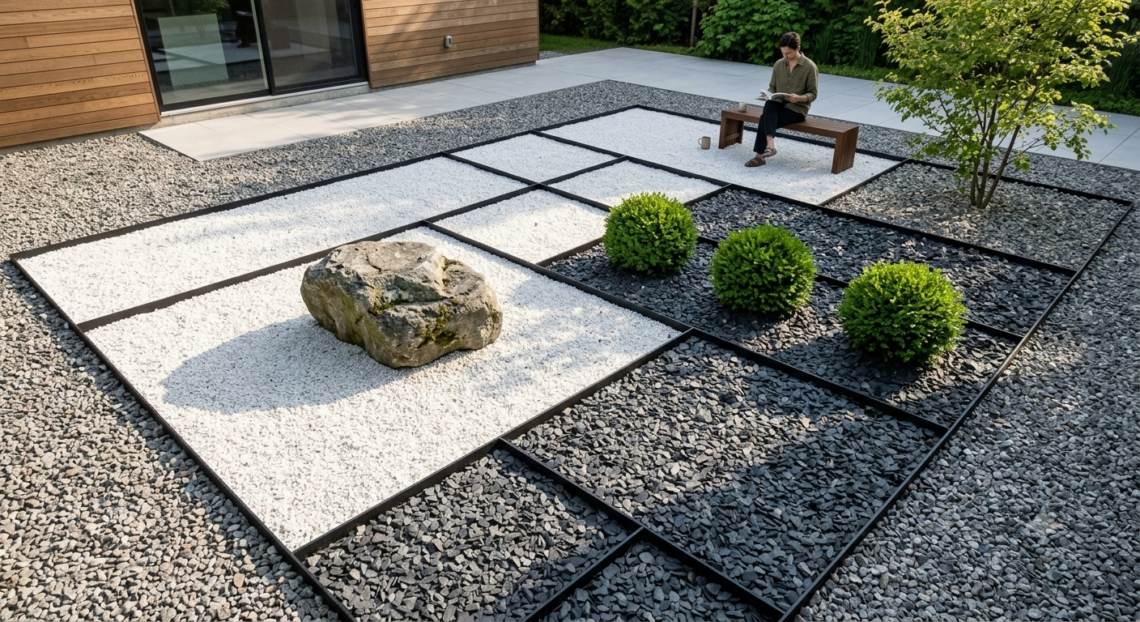
In an era where time has become our most precious commodity, the traditional, high-maintenance backyard is undergoing a massive cultural shift. The endless weekends spent mowing lawns, weeding flower beds, and pouring thousands of gallons of water into temperamental turf are being replaced by a desire for intentional, sustainable, and calming outdoor spaces. Homeowners are increasingly looking for landscaping solutions that offer visual peace without demanding a lifetime of physical labor.
Enter the geometric rock garden—a stunning marriage of modern minimalist design and ancient Japanese Zen philosophy. By utilizing clean lines, structured layouts, and locally sourced stones, you can transform any patch of soil into a sophisticated, maintenance-free sanctuary. Unlike traditional gardens that fight against the natural environment, a geometric rock garden works in harmony with it.
Whether you have a small urban courtyard or a sprawling suburban plot, this comprehensive guide will show you how to choose the right local materials, design high-impact geometric patterns, and construct a permanent, drought-tolerant landscape that looks pristine all year round.
The Philosophy of the Modern Zen Aesthetic
To design a successful rock garden, one must first understand the core principles of the Zen aesthetic: simplicity (Kanso), naturalness (Shizen), and stillness (Seijaku). Traditional Japanese rock gardens (Karesansui) used raked gravel and boulders to represent the fluid energy of water and mountains.
The modern geometric interpretation takes these ancient concepts and updates them with a sharp, contemporary edge. Instead of organic, fluid shapes, modern Zen landscaping introduces architectural geometry—squares, rectangles, perfect circles, and parallel lines. This juxtaposition creates a profound sense of psychological order and visual relief. When the human eye looks at clean, defined geometric zones filled with contrasting stone textures, the brain instantly registers a sense of calm, structure, and cleanliness.
Beyond the mental health benefits, the functional advantages are unmatched. By replacing a traditional organic lawn with localized stone hardscaping, you permanently eliminate the need for chemical fertilizers, noisy lawnmowers, and excessive irrigation systems.
Why Sourcing Local Stones Matters
One of the most critical steps in creating an authentic, sustainable rock garden is choosing local stone varieties rather than importing exotic rocks from thousands of miles away.
- Ecological Synergy: Local stones naturally match the geological character, color palette, and native soil tones of your region. This creates an immediate, seamless visual connection between your property and the surrounding landscape.
- Environmental Footprint: Heavy stone transport generates a staggering amount of carbon emissions. Sourcing your materials from local quarries or landscape yards slashes the environmental impact of your project.
- Natural Weathering Resilience: Local rocks have already spent thousands of years adapting to your specific climate. Whether you experience freezing winters or scorching summer heatwaves, local stones will not crack, flake, or degrade like fragile imported varieties.
Popular Stone Choices for Geometric Contexts:
- Slate and Flagstone: Perfect for creating sharp, flat geometric steps, defined borders, or layered rectangular accents due to their natural cleaving properties.
- River Pebbles and Cobblestones: Excellent for filling circular patterns or creating contrasting fluid texturing within rigid wooden or metal grid frames.
- Crushed Volcanic Rock or Limestone: Ideal as a high-contrast base layer. Crushed white limestone reflects light beautifully, while dark charcoal volcanic rock absorbs heat and provides a dramatic, ultra-modern backdrop.
Step-by-Step Blueprint: Constructing Your Geometric Rock Garden
Building a geometric rock garden requires careful planning and precise execution. Because the goal is a maintenance-free finish, taking the time to prepare the foundational layers correctly will prevent weeds and shifting for decades to come.
Materials and Tools Needed:
- Assorted Local Stones: A mix of large structural boulders, mid-sized accent rocks, and bulk crushed gravel or pebbles for the base.
- Heavy-Duty Landscape Fabric: Commercial-grade, woven, UV-resistant weed barrier (do not skimp on quality here; cheap fabric will disintegrate within two seasons).
- Geometric Edging: Heavy-duty steel, aluminum, or thick treated wood composite edging strips to hold the stones in rigid geometric shapes.
- Tools: Shovel, rake, measuring tape, spirit level, rubber mallet, and landscape staples.
Construction Steps:
Step 1: Design and Grid Mapping
Before moving a single stone, sketch your design out on graph paper. Once you have your geometric layout (such as a matrix of squares, concentric circles, or interlocking rectangular paths), translate the design onto your actual ground using stakes and bright landscaping string. Use a tape measure to ensure all your angles are perfectly square and parallel.
Step 2: Excavation and Soil Leveling
Dig out the entire designated area to a depth of roughly 3 to 4 inches. Remove all existing grass, stubborn root systems, and loose debris. Once excavated, rake the subsoil completely flat and use a hand tamper or heavy roller to compact the earth firmly. A solid, unyielding base prevents heavy rocks from sinking unevenly over time.
Step 3: Securing the Geometric Borders
Install your steel or heavy-duty aluminum landscape edging directly along the grid lines you mapped out with your string. Secure the edging firmly into the ground using anchor stakes and a rubber mallet. This edging acts as the permanent architectural boundary, keeping your different colored stones and gravel textures from bleeding into one another during heavy rainstorms.
Step 4: Laying the Ultimate Weed Barrier
Roll out your premium commercial-grade landscape fabric across the entire excavated area, cutting it precisely to fit tightly within the geometric edging zones. Overlap any seams by at least 8 inches and secure the fabric to the ground every 2 feet using steel landscape staples. This barrier allows rainwater to drain freely into the water table below while completely starving weeds of the light they need to germinate.
Step 5: Pouring and Layering the Stones
Now comes the artistic phase. Begin by placing your large, local anchor boulders first inside their designated geometric zones, burying the bottom 1/3 of the rock into the ground so they look like natural outcroppings rather than rocks dropped casually on top of the soil. Next, shovel your bulk crushed gravel, river pebbles, or slate chips into their respective bordered sections. Use a stiff rake to smooth the filler stones out to a uniform depth of 2 inches, matching the level of your edging.
Enhancing Your Zen Sanctuary with Minimalist Vegetation
While a geometric rock garden relies heavily on stone elements, adding a few carefully curated, low-maintenance plants introduces life, soft contrast, and elegant movement into the space. The key is moderation—plants should complement the geometry, not overcrowd it.
- Architectural Grasses: Species like Japanese Forest Grass (Hakonechloa) or Blue Fescue (Festuca glauca) grow in clean, rounded tufts that look incredible protruding from a sea of dark slate chips.
- Structural Succulents: Sempervivum (Hen and Chicks) or cold-hardy Sedums require almost zero watering and grow in beautiful, tight geometric rosettes that echo the design of the garden.
- Dwarf Conifers or Boxwoods: These can be gently pruned into sharp or spherical forms, enhancing the clean lines of your geometric stone borders.
Long-Term Care: True Maintenance-Free Living
Once completed, your geometric rock garden requires virtually no traditional maintenance. You can officially throw away your lawnmower and retire your weed sprayers.
To keep the aesthetic looking sharp and showroom-ready throughout the changing seasons, simply perform two basic tasks:
- Debris Removal: Use a lightweight leaf blower or a stiff broom once a month to clear away fallen leaves, twigs, or windblown organic debris before they can break down into organic compost on top of your clean stones.
- Occasional Raking: If children or pets displace a few pebbles from their geometric grids, simply glide a standard garden rake over the surface for two minutes to restore the perfect, flat, uniform look.
Conclusion
A geometric rock garden is a profound investment in both your property value and your personal peace of mind. By substituting high-maintenance lawns with structured, locally sourced stone installations, you create an outdoor space that exudes timeless elegance, honors the native environment, and promotes mental relaxation. This season, step off the endless cycle of backyard chores, embrace the calming principles of Zen design, and reclaim your weekends in a garden built to last a lifetime.