In the hustle of modern life, our homes often become centers of digital noise and “high-resistance” energy. At BLOOHOME, we believe that true sanctuary is found when we align our internal frequency with the grounding resonance of the Earth.
Creating an outdoor meditation space is not about expensive landscaping; it is about Sacred Geometry and Bio-Hacking. By intentionally designing a small corner of your garden, you create a “Zero-Point” zone where your biological voltage can reset, lowering cortisol and raising your heart-brain coherence.
1. The Geometry of Peace: Finding Your “North”
Ancient traditions and modern geobiology suggest that the orientation of your space affects your nervous system.
- The Blueprint: If possible, face East to greet the rising sun (new beginnings) or North for stability and stillness.
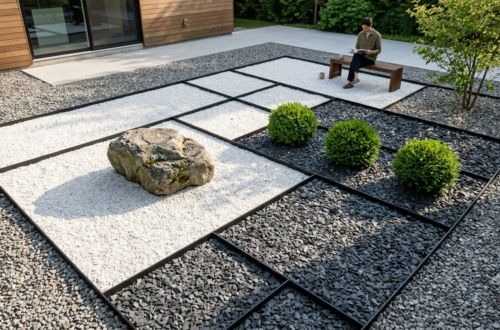
- The Structure: Use the Circle or the Square. A circular seating area mimics the Toroide—the natural flow of energy—while a square space defined by cinder blocks or low hedges provides a sense of “container” and security for the mind to let go.
2. Sensory Grounding: The Earthing Effect
Direct physical contact with the Earth (Earthing) allows your body to absorb free electrons, which neutralize oxidative stress.
- The Design: Instead of a wooden deck, use a patch of soft moss, fine clover, or a sand pit.
- The BLOOHOME Touch: Place a few large, flat river stones in your space. These act as thermal batteries, absorbing the sun’s infrared energy during the day and releasing it slowly, providing a warm, grounding surface for your feet or seat.
3. The Soundscape: Masking the Urban “Static”
Unwanted noise is a frequency disruptor. You can’t always stop the city sounds, but you can “mask” them with natural white noise to keep your brain in Alpha or Theta wave states.
- The “Water Feature” Hack: You don’t need an expensive fountain. A simple solar-powered pump in a ceramic pot filled with stones creates a gentle trickle that masks distant traffic.
- Biological Wind Chimes: Plant Bamboo or tall Grasses along the perimeter. The “hush” of wind through the leaves is a fractal sound pattern that the brain recognizes as “Safe.”
4. Botanical “Voltage” Aromatherapy
Certain plants emit volatile organic compounds (terpenes) that directly interact with your limbic system to induce calm.
- The Zen Palette: * Lavender: For lowering blood pressure and slowing the heart rate.
- Jasmine: For a natural “Valium-like” effect on the neurotransmitters.
- Rosemary: To clear “mental fog” and sharpen focus during your practice.
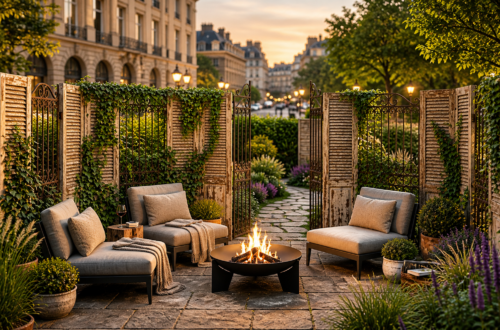
- Placement: Plant these in a “U-shape” around your seating area to create a concentrated “scent-bubble.”
5. The Focal Point: A Sacred Object
Every meditation space needs a “Drishti” or a point of focus to keep the eyes (and mind) from wandering.
- The DIY Idea: A simple Zen Rock stack (Cairn) or a single Cinder Block used as a pedestal for a candle or a bowl of water.
- The Meaning: This object represents your “Still Point”—the part of you that remains unchanged regardless of the chaos in the outside world.
Meditation Space Design Checklist
| Element | Purpose | BLOOHOME DIY Idea |
| Foundation | Grounding/Earthing | Moss, Sand, or River Stones |
| Privacy | Nervous System Safety | Cinder block wall or Bamboo hedge |
| Sound | Frequency Masking | Solar-pot fountain or tall Grasses |
| Scent | Limbic System Activation | Lavender & Jasmine “Scent-Bubble” |
| Focal Point | Mental Focus | Geometric rock stack or single Candle |